
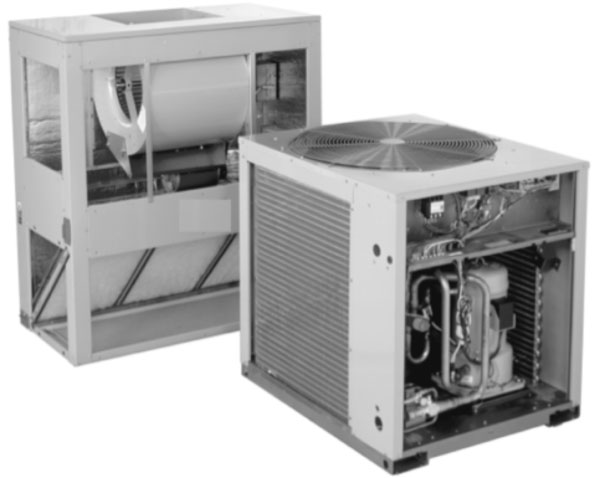
The conventional cooling systems in the residential buildings could consist of central heat pump, chiller (commercial use in high tonnage) or condensing unit (residential or small business use smaller sizes).
Heat pump are particularly very common as a source of cooling (and in some cases for heating), for obvious reasons as they provide both cooling and heating by consuming less electrical energy and they don’t generate any Green House Gas (GHG).
A heat pump, in simple terms, is a device that transfers heat from a source (such as the heat of the soil in the garden) to another location (like the hot-water system of a house) or vice versa.
To do this, heat pumps, as opposed to boilers, use a small amount of electricity but they often achieve a 200-600% efficiency rate, as the amount of heat produced is markedly higher than the energy consumed.
Heat pumps play also an important part in reaching the ambitious national Net Zero target. With an expected high heat pump installation in new homes by 2050, their role in reducing the Canada’s carbon emissions at a domestic and national level has drastically increased.
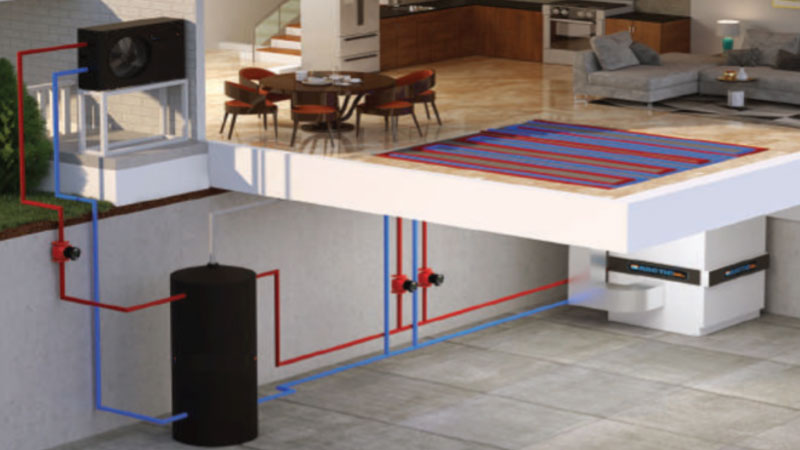
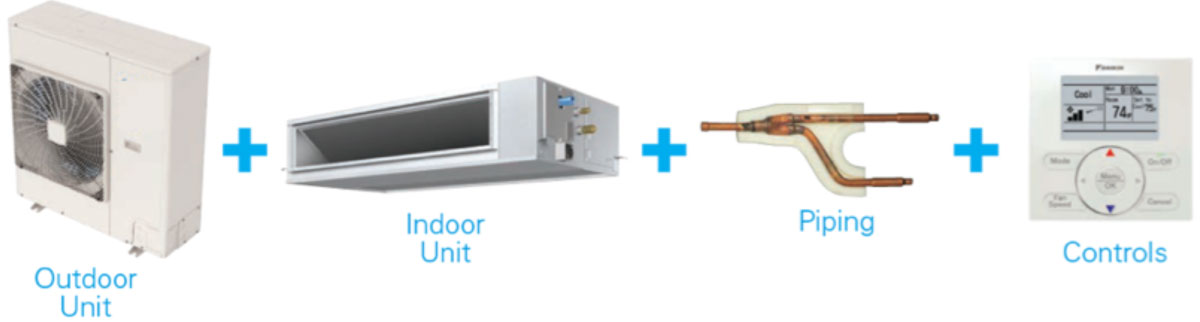
In residential applications a heat pump consists of the followings where an outdoor unit could serve multiple indoor units installed in different spaces and the temperature in each space is controlled by a designated thermostat:
For commercial applications a typical ventilation system (Air Handling Unit) is supplied by a Heat Pump (such as air to water heat pump) combined with Energy Recovery Ventilator (ERV).
Depending on the weather zones the heat pump may requires heating and cooling back up system since the heat pump performance drops significantly at cold zones where temperatures drop below -15 DegC.